

About Valtara
To help organizations transition from traditional waste disposal models toward cleaner, safer, more sustainable, and economically efficient circular waste management systems.
We believe waste should no longer be viewed simply as a disposal problem, but as a recoverable resource stream with environmental and economic value.
Valtara Circular Solutions is a commercial and operational partner for OMPECO technologies and solutions.
OMPECO’s patented Converter® systems are designed to:
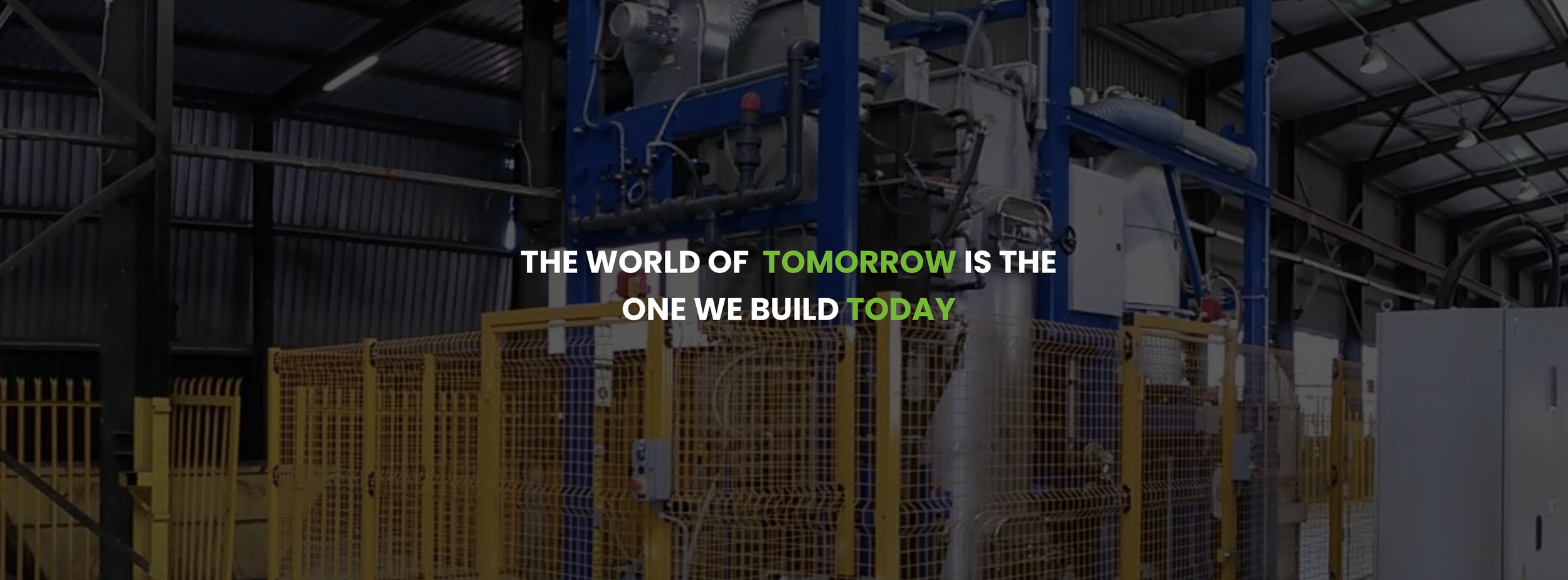
Treat waste directly onsite
Reduce waste transportation and landfill dependency
Eliminate many risks associated with infectious and regulated waste handling
Reduce the volume and weight of waste streams
Convert waste into sterile Refuse Derived Fuel (RDF)
Operate without combustion, chemicals, microwaves, or pressure vessels
The technology uses a patented mechanical-to-thermal energy transformation process that sterilizes and dehydrates waste through friction-generated moist heat under controlled negative pressure.
Redefining Waste Management with Ompeco
At Ompeco, we offer a revolutionary, eco-friendly, and cost-saving alternative to traditional waste management. Our innovative solutions transform the way businesses handle "last kilo" wastes—materials that can’t be sorted or recycled, such as mixed plastics, paper, glass, and organics—into a renewable energy source: Refuse-Derived Fuel (RDF).
By reducing waste inputs by 80% in volume and 50% in weight, our process not only minimizes waste but also produces a sterile, inert by-product, free from bacteria and viruses, ready for post-processing applications.
Why Choose Ompeco for Waste Management?
Revolutionizing Waste Disposal
Traditional methods send non-recyclable refuse to landfills or incinerators, leading to rising costs and environmental concerns. Ompeco captures the energy in waste and converts it into a clean, fossil fuel alternative—helping businesses operate efficiently while reducing their environmental footprint.
Cost Savings & Sustainability
As landfill costs rise, converting waste into energy ensures businesses stay ahead of environmental regulations and achieve significant cost savings. Additionally, it enhances sustainability efforts, helping companies meet carbon reduction and energy efficiency goals.
The Benefits of RDF Technology
Zero Emissions: No processing emissions or off-gassing.
Reduced GHG: Cuts waste-related greenhouse gases by 50%.
Landfill-Free: Eliminates leaching and contamination risks.
Sterile Output: No bacteria, viruses, or harmful pathogens.
Smaller Waste Volume: Saves space with reduced waste weight and size.
The Ompeco Difference: The Converter® Technology
The Converter® is a patented, mechanical waste treatment system that uses friction-generated thermal energy to transform waste in just 30 minutes. This emission-free process ensures no chemicals, combustion, or microwaves are used, making it risk-free and environmentally friendly.
How It Works:
Load: Waste is placed into the chamber.
Crush & Heat: Rotating blades grind waste while frictional heat rises to 151°C.
Evaporate: Moisture is removed, sterilizing the material.
Cool & Pack: The treated waste is cooled, bagged, and ready for safe storage or reuse as RDF.
Tailored Solutions for Every Industry
Ompeco understands that every facility has unique waste management needs. That’s why we offer six specialized Converter® series, with capacities ranging from 25 to 5000 liters, to fit any operation, from small businesses to large industrial facilities.
Transform Your Waste Management Today
At Ompeco, we’re committed to helping businesses achieve zero-to-landfill targets while reducing costs and environmental impact. Join the waste management revolution and turn your waste into a sustainable energy solution.
Contact us to learn how Ompeco can transform your waste management strategy!
The Converter® Waste Treatment Process
Step 1: Loading
Waste, contained in plastic bags, is manually loaded into the treatment chamber.
Step 2: Crushing
The rotor begins operation, gradually accelerating to grind the waste. This process generates heat, quickly raising the chamber’s temperature to approximately 100℃.
Step 3: Evaporation
As the material rotates, frictional heat evaporates the moisture from the waste. The temperature remains steady at 100℃.
Step 4: Superheating
Once all moisture is eliminated, the chamber's temperature rises to 151℃ due to continued frictional heat.
Step 5: Sterilization
The waste is maintained at 151℃ for three minutes, with water added to create moist heat conditions, ensuring thorough sterilization or pasteurization.
Step 6: Cooling
The waste is lightly sprinkled with water, cooling it to around 100℃. A vacuum pump further reduces the temperature to 60℃, making the material safe to handle.
Step 7: Unloading
The treated material is expelled through a servo-operated valve at the chamber’s base, packaged into vacuum bags, and ready for safe storage or further use.
This efficient, eco-friendly process transforms waste into a sterile, odorless, and sustainable by-product in just 30 minutes.